TL;DR:
- Xero, FreeAgent, QuickBooks Online, FreshBooks, and Zoho Books are top alternatives to Debitoor, offering essential UK invoicing, VAT support, and bank feeds. Choosing the right tool depends on your business size, VAT registration status, and need for accountant collaboration, while migration requires careful data transfer and early bank feed setup. For complex compliance or scaling, consulting an accountant like Priceandaccountants ensures seamless transition and ongoing regulatory adherence.
If you need a quick answer: the strongest Debitoor alternatives for UK freelancers and small businesses right now are Xero, FreeAgent, QuickBooks Online, FreshBooks, and Zoho Books. Each covers the core gap Debitoor left — cloud invoicing, bank feeds, and UK VAT support — but they suit different user profiles. Here is how to pick the right one fast.
Quick shortlist by user profile:
- Sole trader or freelancer: FreeAgent or FreshBooks. Both handle UK VAT, recurring invoices and client reminders without requiring an accounting degree.
- Small limited company: Xero or QuickBooks Online. You get bank feeds, reconciliation, and the accountant collaboration that a limited company needs at year end.
- Budget-conscious business: Zoho Books. Solid automation at a lower price point than most UK competitors.
- Compliance-first UK business: KashFlow or Sage Business Cloud Accounting. Both carry strong VAT and payroll options built for UK rules.
- Bundled software-plus-tax support: Crunch. Aimed at sole traders and contractors who want an accountant in the package.
One important caveat: if your business is growing fast, approaching VAT registration, or managing R&D tax claims and SEIS/EIS investment, a DIY tool will only take you so far. That is where an accountant-assisted approach through Priceandaccountants makes more sense than switching software alone.
Table of Contents
- How the top Debitoor alternatives compare side by side
- Detailed profiles: features, pricing, and who each tool suits
- How to choose the right Debitoor alternative for your UK business
- Switching from Debitoor: a UK migration checklist
- Verdict: best pick by UK user profile
- Key takeaways
- When software is not enough: a note on choosing tools versus hiring help
- Priceandaccountants can help you switch and stay compliant
- Useful sources and further reading
How the top Debitoor alternatives compare side by side
The table below maps each tool against the dimensions that matter most for UK small businesses: starting price, invoicing capability, VAT/MTD support, bank feeds, mobile app, and free trial availability.

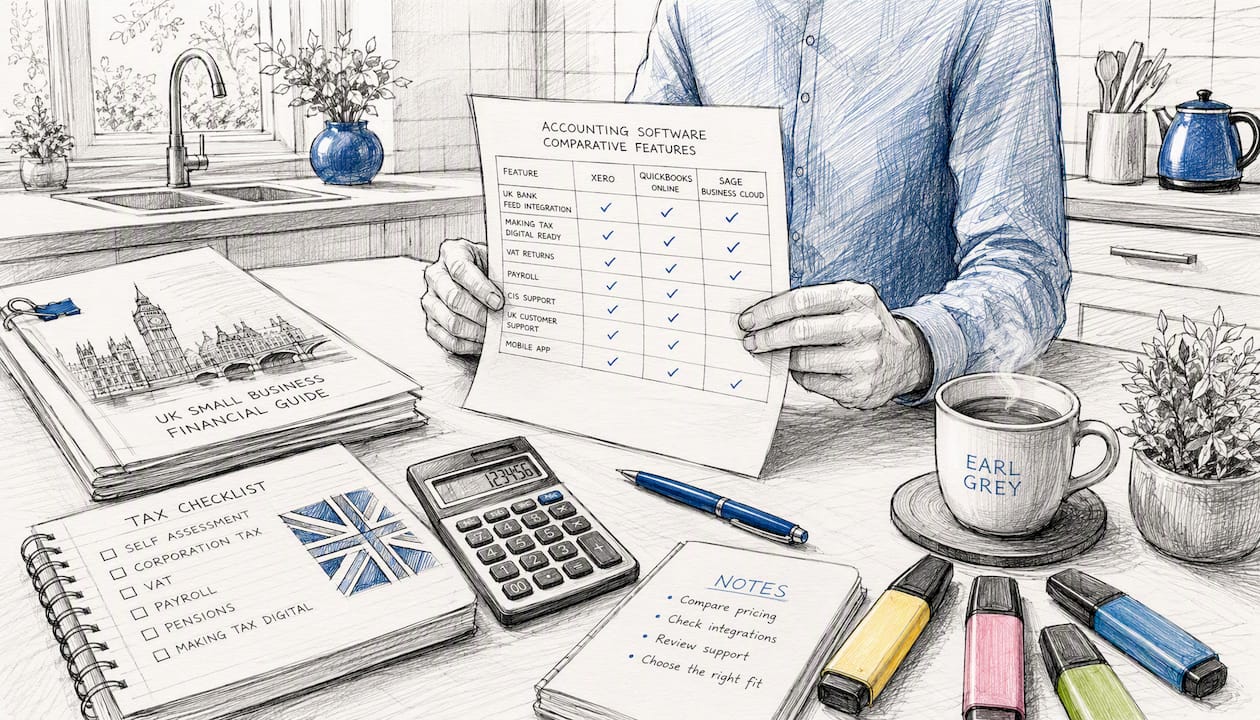
ToolBest forStarting price (GBP)Invoicing featuresVAT/MTD supportBank feeds & reconciliationMobile appFree trial / free tierXeroGrowing small businesses needing accountant collaboration~£15/month (Starter)Custom invoices, recurring, reminders, online paymentsYes, MTD-readyYes, automatediOS & AndroidFree trial availableQuickBooks OnlineSmall companies needing broad feature coverage~£14/month (Simple Start)Custom invoices, recurring, reminders, online paymentsYes, MTD-readyYes, automatediOS & AndroidFree trial availableFreeAgentUK freelancers and contractors~£15/month (after offer)Custom invoices, recurring, reminders, online paymentsYes, MTD-readyYesiOS & AndroidFree trial availableZoho BooksBudget-aware small businessesFree tier available; paid from ~£10/monthCustom invoices, recurring, reminders, online paymentsYesYesiOS & AndroidFree tier; 14-day trial on paid plansSage Business Cloud AccountingBusinesses wanting recognised UK vendor~£15/month (Start)Custom invoices, recurringYes, MTD-readyYesiOS & AndroidFree trial availableCrunchSole traders wanting bundled tax supportPricing starts from roughly £15 per month for sole traders.Invoicing includedYesLimitediOS & AndroidFree plan availableFreshBooksFreelancers prioritising invoicing simplicity~£15/month (Lite)Custom invoices, recurring, reminders, online paymentsYes (VAT)YesiOS & AndroidFree trial availableRoundedMicro-businesses needing minimal bookkeepingFrom approximately £10 per monthCustom invoices, recurringLimitedLimitediOS & AndroidFree trial availableKashFlowUK businesses needing VAT and payroll~£10/month (Starter)Custom invoices, recurringYes, MTD-readyYesiOS & Android14-day free trial
A note on pricing: plan shapes and introductory offers change frequently. Always verify current GBP pricing on each vendor’s UK site before committing.
Online invoicing with built-in payment links can cut the time between sending an invoice and receiving payment significantly, which is one of the strongest practical reasons to move from a basic template tool to a cloud platform.
Standout trade-offs at a glance:
- Xero — has the widest integration ecosystem but costs more as you add users or features.
- Zoho Books — offers the best value at entry level but its UK bank feed coverage is narrower than the market leaders.
Detailed profiles: features, pricing, and who each tool suits
Xero
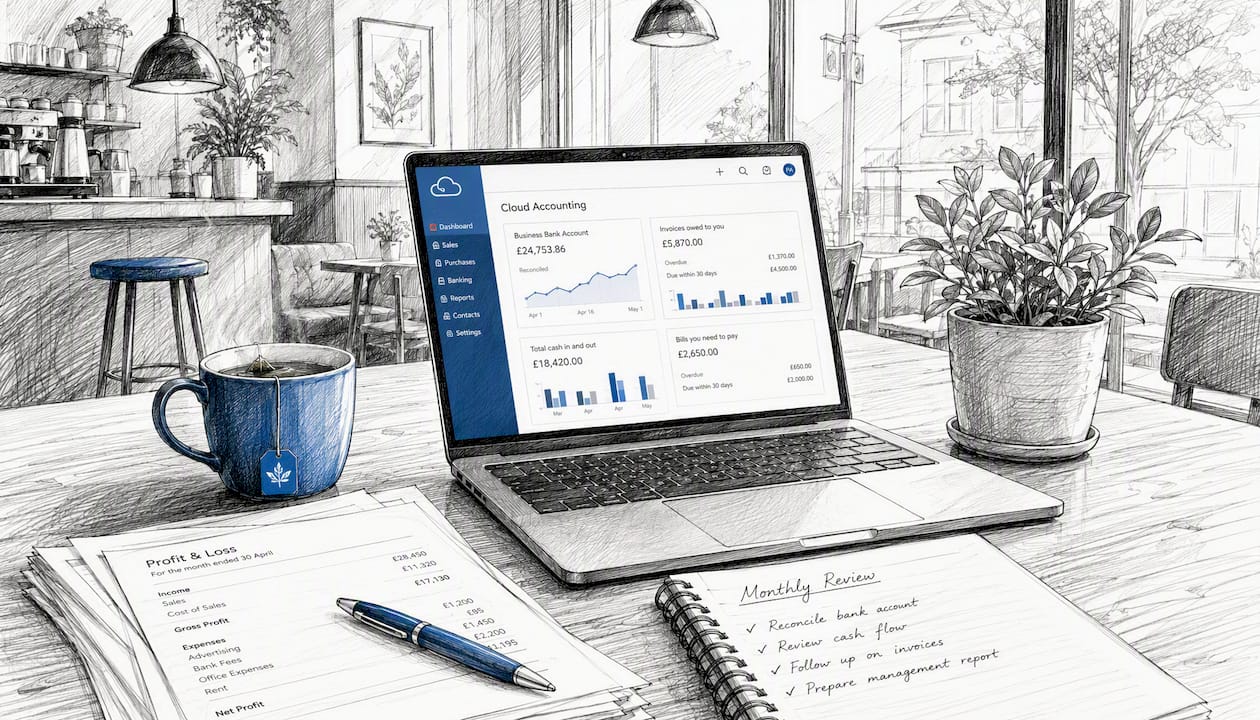
Xero is the most widely used cloud accounting platform among UK accountants, and its bank-feed reliability is a genuine differentiator. Automated bank feeds and reconciliation reduce weekly bookkeeping time and cut the manual errors that spreadsheet-based tools like Debitoor were prone to. The Starter plan costs around £15 per month covers invoicing, bank reconciliation, and VAT returns but caps the number of invoices and bills per month. The Standard plan removes those caps.
Best for: Growing small businesses that collaborate with an accountant and need strong reporting.
Invoicing: Custom branded invoices, recurring billing, automated payment reminders, and online payment links via Stripe or GoCardless.
Accounting: Automated bank feeds, bank reconciliation, VAT returns, MTD-ready, management reporting.
Integrations: Extensive — Stripe, PayPal, Shopify, Dext (receipt capture), Gusto, and hundreds more via the Xero app marketplace.
Migration: Xero provides a conversion tool and supports CSV import of contacts, invoices, and chart of accounts. Most accountants can complete a basic migration in a day.
- Pros: Best-in-class accountant collaboration; widest UK app ecosystem; strong MTD support.
- Cons: Invoice and bill caps on the Starter plan; price rises steeply with add-ons.
QuickBooks Online
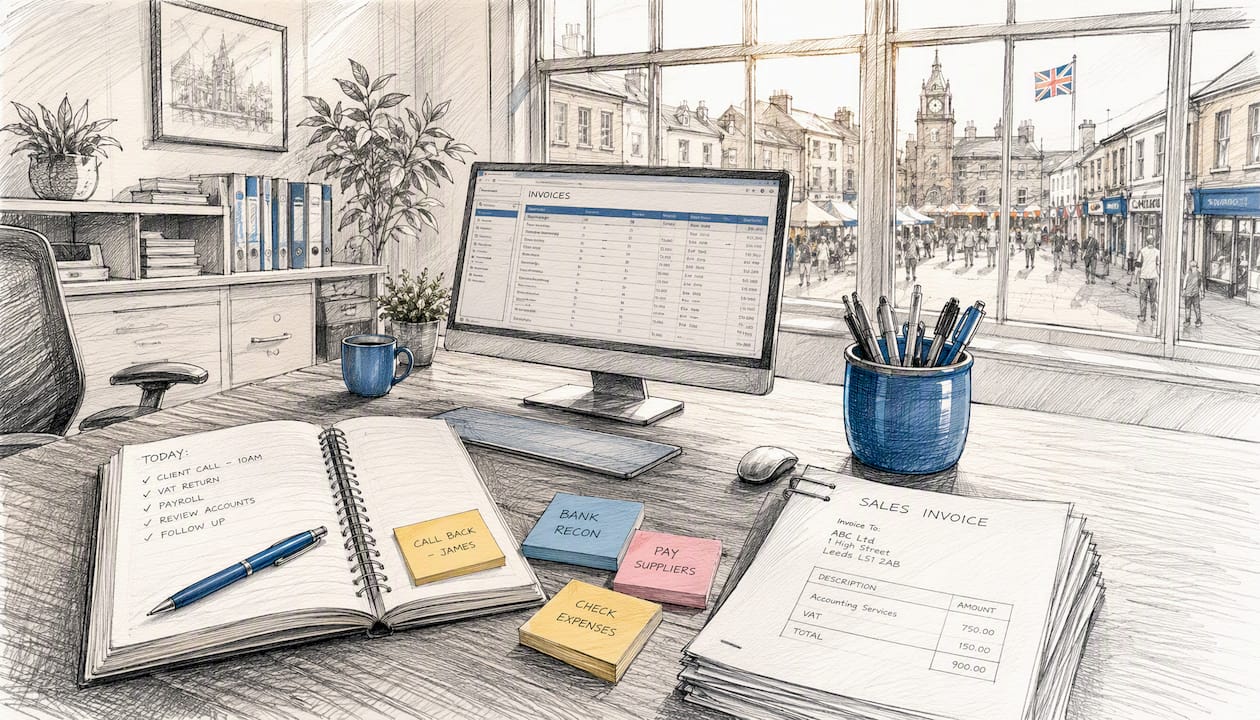
QuickBooks Online covers more accounting ground than most small businesses will ever use, which is both its strength and its occasional weakness. The interface is familiar to many UK accountants, and the Simple Start plan has a starting price around £14 per month. The breadth of third-party app support rivals Xero.
Best for: Small companies wanting comprehensive feature coverage and a large pool of compatible accountants.
Invoicing: Custom invoices, recurring billing, reminders, and online payments via Stripe and PayPal.
Accounting: Bank feeds, reconciliation, VAT returns, MTD-ready, profit and loss, balance sheet.
Migration: Supports import of customer and supplier lists, opening balances, and historical transactions via CSV.
- Pros: Deep feature set; widely understood by UK accountants; strong payroll add-on.
- Cons: Can feel cluttered for a sole trader who only needs invoicing; pricing increases noticeably at higher tiers.
FreeAgent
FreeAgent was built with UK freelancers and contractors in mind, and it shows. Self-assessment tax return preparation, contractor-specific project tracking, and MTD VAT filing are all built in rather than bolted on. NatWest and RBS customers get FreeAgent free with a business account, which makes it a near-zero-cost option for those banking there.
Best for: Freelancers, contractors, and small limited companies wanting UK-tailored workflows.
Invoicing: Custom invoices, recurring billing, automated reminders, and online payment links.
Accounting: Bank feeds, VAT returns, MTD submission, self-assessment estimates, project-level reporting.
Migration: CSV import for contacts and transactions; straightforward for businesses with clean Debitoor exports.
- Cons: — Reporting depth is lighter than Xero or QuickBooks Online; less suited to businesses with complex inventory.
Zoho Books
Zoho Books punches above its price point. The free tier covers up to 1,000 invoices per year for businesses with annual revenue under a threshold, and paid plans start from approximately £10 per month. Automation rules — auto-payment reminders, recurring invoices, workflow triggers — are available at lower price points than most competitors offer them.
Best for: Cost-conscious small businesses that want automation without paying Xero or QuickBooks Online prices.
Invoicing: Custom invoices, recurring billing, automated reminders, online payments via Stripe and PayPal.
Accounting: Bank feeds (coverage varies by UK bank), reconciliation, VAT returns, basic reporting.
Migration: CSV import supported; Zoho also offers a dedicated migration tool from several competitors.
- Cons: — UK bank feed coverage is patchier than Xero; support response times can be slower.
Sage Business Cloud Accounting
Sage has been in the UK market long enough that most accountants know it well. The Start plan costs about £15 per month and covers invoicing and VAT; the Standard plan adds cash flow forecasting and invoice chasing. MTD VAT filing is included across plans. Sage’s payroll add-on (Sage Payroll) integrates cleanly, which matters for businesses with employees.
Best for: Businesses wanting a recognised UK vendor with payroll integration and solid compliance coverage.
Invoicing: Custom invoices, recurring billing, automated reminders.
Accounting: Bank feeds, reconciliation, VAT returns, MTD-ready, cash flow forecasting (Standard plan).
Migration: Supports import of contacts, opening balances, and transactions; Sage has a dedicated migration support team.
- Cons: — Interface feels less modern than Xero or FreshBooks; app ecosystem is smaller.
Crunch
Crunch is not purely a software tool — it bundles accountant access into the subscription. The sole trader plan includes bookkeeping software, a dedicated accountant, and tax return filing. For a contractor or sole trader who wants to hand off the tax side entirely, the monthly fee can work out cheaper than paying a separate accountant on top of a software subscription.
Best for: Sole traders and contractors who want tax support included rather than managing it separately.
Invoicing: Invoicing included across plans.
Accounting: VAT returns, self-assessment, limited company accounts where applicable.
Migration: Crunch’s onboarding team handles most of the data transfer.
- Pros: Accountant support included; good for contractors with straightforward finances.
- Cons: Less flexible than standalone software; not suited to businesses with complex reporting needs.
FreshBooks
FreshBooks is the most invoice-first tool on this list. The client portal, automated payment reminders, and time-tracking-to-invoice flow are genuinely well designed. For a service business that bills by the hour or project, the Lite plan (~£15/month) covers most needs. VAT is supported, though FreshBooks is not as deeply MTD-integrated as FreeAgent or Xero.
Best for: Freelancers and small service businesses where client-facing invoicing quality matters most.
Invoicing: Custom branded invoices, recurring billing, automated reminders, online payments, client portal.
Accounting: Bank feeds, expense tracking, basic VAT support, profit and loss reporting.
Migration: CSV import for clients and expenses; straightforward for Debitoor users with clean data.
- Cons: — Accounting depth is lighter than Xero or QuickBooks Online; MTD integration less mature.
Rounded
Rounded targets micro-businesses and sole traders who find most accounting software over-engineered. The interface is minimal by design: create an invoice, track an expense, see a simple summary. Bank feeds and reconciliation are available but basic. It is not the right tool once payroll, multi-currency, or complex VAT scenarios enter the picture.
Best for: Sole traders invoicing a small number of clients who want speed over depth.
Invoicing: Custom invoices, recurring billing, basic reminders.
Accounting: Basic expense tracking, simple reporting, limited bank feed support.
Migration: CSV import for contacts and invoices.
- Pros: Very fast to set up; clean, uncluttered interface; low cost.
- Cons: Limited bank feed coverage; no payroll; not suited to VAT-registered businesses with complex needs.
KashFlow
KashFlow is built for UK compliance. VAT returns, MTD submission, and payroll (via KashFlow Payroll) are core features rather than add-ons. The Starter plan costs around £10 per month and covers invoicing and basic bookkeeping; the Business plan adds payroll. It is not the most modern interface, but for a UK small business that needs reliable VAT filing and payroll in one place, it does the job cleanly.
Best for: UK small businesses that need VAT-strong workflows and payroll without paying for a premium platform.
Invoicing: Custom invoices, recurring billing, automated reminders.
Accounting: Bank feeds, reconciliation, VAT returns, MTD-ready, payroll integration.
Migration: CSV import supported; KashFlow has a help centre with migration guides.
- Cons: — Interface is dated compared to Xero or FreshBooks; smaller app ecosystem.
How to choose the right Debitoor alternative for your UK business
The best invoicing software depends entirely on context: a freelancer billing three clients a month has completely different needs from a limited company with employees, a VAT return due every quarter, and an accountant reviewing the books. Work through these questions before you trial anything.
Decision checklist:
- Are you VAT-registered or likely to register soon? If yes, MTD compatibility is non-negotiable. Xero, QuickBooks Online, FreeAgent, Sage, and KashFlow all support MTD VAT filing directly. Zoho Books and FreshBooks support VAT but with varying MTD depth — verify before committing.
- How many users need access? Xero and QuickBooks Online scale to multiple users cleanly. FreeAgent and FreshBooks are better suited to solo operators or very small teams.
- How reliable are the bank feeds for your specific bank? Open Banking coverage varies. Test the feed for your actual business account during the trial period — do not assume it works until you have seen it pull transactions.
- Do you need payroll? Sage and KashFlow have the cleanest payroll integrations for UK businesses. Xero supports payroll via an add-on. FreshBooks and Rounded do not offer payroll.
- Do you invoice in multiple currencies? Zoho Books and Xero handle multi-currency well. FreeAgent and KashFlow are more limited here.
- Does your accountant have a preferred platform? Many UK accountants work primarily in Xero or QuickBooks Online. Choosing a platform your accountant already uses saves setup time and reduces the risk of reconciliation errors at year end.
- Do you need integrations with Stripe, PayPal, Shopify, or Dext? Xero has the widest ecosystem. QuickBooks Online is close behind. Rounded and Crunch have limited third-party integration options.
Questions to ask during your trial:
- Can you import your Debitoor data (contacts, open invoices, chart of accounts) without losing historical records?
- How long does bank reconciliation take once the feed is live?
- Can you customise invoice templates to match your branding?
- How straightforward is submitting a VAT return end-to-end?
Red flags to watch for:
- No UK VAT or MTD support listed on the pricing page.
- Bank feed only available via manual CSV upload rather than Open Banking.
- No data export option — you should always be able to take your data with you.
- Pricing tiers that hide key features (like bank reconciliation) behind the most expensive plan.
Pro Tip: Before you sign up for any paid plan, ask whether your accountant can be added as a user at no extra cost. Most platforms allow this, but the terms vary. An accountant with read-only access to your live books can catch errors before they become year-end problems — and that access is worth more than most premium features.
For a deeper look at cloud accounting implementation steps for UK businesses, Priceandaccountants has a practical guide covering timelines and common pitfalls.
Switching from Debitoor: a UK migration checklist
Debitoor’s closure left many users mid-year with open invoices, incomplete VAT periods, and no automatic migration path. The steps below apply whether you are moving to Xero, FreeAgent, or any other platform on this list.
Step-by-step migration checklist:
- Export everything from Debitoor first. Download your contacts, invoice history, expense records, and chart of accounts as CSV files before you do anything else. Debitoor’s export function covers most of these; check that open invoices and credit notes are included.
- Map your chart of accounts. Your new platform will have a default chart of accounts. Match your Debitoor categories to the new ones before importing. Mismatched categories cause reconciliation gaps that are painful to unpick at year end. Priceandaccountants’s guide on accounting policies explains how to approach this mapping.
- Carry over open invoices and credit notes. Do not start fresh and leave outstanding amounts unrecorded. Import open invoices as at your migration date so your aged debtors report is accurate from day one.
- Set up bank feeds before entering historical data. Connect your business bank account via Open Banking first. Reliable bank feeds and automated reconciliation are the single biggest time-saving feature of any cloud platform — get this working before you start reconciling historical transactions.
- Confirm your VAT position. Identify your last submitted VAT return in Debitoor and your current VAT period start date. Your new platform needs to pick up from the correct date to avoid gaps or duplicates in your MTD submission history.
- Check Making Tax Digital compatibility. If you are VAT-registered, your new software must be MTD-compatible and able to submit returns directly to HMRC. Test this in the trial period, not after you have committed.
- Reconcile one full month before going live. Run a parallel month in the new platform using your bank statement and Debitoor export. If the closing balances match, you are ready to switch fully.
Typical migration timeline for a UK small business:
PhaseTasksTypical durationPreparationExport Debitoor data; review chart of accounts1–2 daysPlatform setupCreate account; configure VAT settings; connect bank feed1 dayData importImport contacts, open invoices, opening balances1–3 daysParallel runReconcile one month in both systems1–2 weeksGo-liveClose Debitoor; confirm MTD registration in new platform1 dayAccountant handoverShare access; review opening balances together1–2 days
Accountant hand-off notes:
- Share read-only or accountant-level access to your new platform on day one. Do not wait until year end.
- Provide your accountant with the Debitoor export files alongside the new platform access — they will need both to verify opening balances.
- Confirm who is responsible for MTD VAT submissions going forward. If your accountant is filing on your behalf, they need agent authorisation in your HMRC online account, not just software access.
Pro Tip: Set your migration start date to the first day of a VAT period, not mid-quarter. Starting mid-quarter means splitting one VAT return across two systems, which creates reconciliation headaches that take hours to resolve.
Pro Tip: Ask your new platform’s support team whether they have a dedicated Debitoor migration guide. Several vendors produced specific guidance when Debitoor closed — this can save significant setup time.
For bookkeeping best practices during and after a migration, Priceandaccountants has a UK-focused guide covering year-end reconciliation and VAT period management.
Verdict: best pick by UK user profile
- Sole trader or freelancer (simple invoicing, no employees): — FreeAgent or FreshBooks. FreeAgent wins if you want self-assessment built in; FreshBooks wins if client-facing invoice quality is your priority.
- Contractor with a limited company: — FreeAgent or Xero. FreeAgent handles contractor-specific workflows neatly; Xero is the better choice once you need an accountant reviewing your books regularly.
The VAT and MTD angle matters more than most comparison articles acknowledge. Choosing a tool that cannot file directly with HMRC means either paying for a bridging solution or doing manual submissions — both add friction and risk. Prioritise MTD compatibility from the start.
Key takeaways
The strongest Debitoor alternatives for UK businesses are Xero, FreeAgent, QuickBooks Online, FreshBooks, and Zoho Books, each suited to a different user profile and budget.
PointDetailsMTD compatibility is non-negotiableAny replacement for Debitoor must support Making Tax Digital VAT filing if you are VAT-registered.Match the tool to your user profileFreelancers suit FreeAgent or FreshBooks; growing limited companies suit Xero or QuickBooks Online.Test bank feeds during the trialOpen Banking coverage varies by bank; confirm your feed works before committing to a paid plan.Migrate at the start of a VAT periodStarting mid-quarter splits a VAT return across two systems and creates reconciliation problems.Priceandaccountants for managed accountingFor businesses needing R&D claims, SEIS/EIS compliance, or a hands-on finance partner, Priceandaccountants offers managed accounting beyond what any software tool provides.
When software is not enough: a note on choosing tools versus hiring help
Most small businesses switching from Debitoor genuinely do not need an accountant to pick invoicing software. FreeAgent, FreshBooks, or Zoho Books will cover the basics, and the trial periods are long enough to test whether the tool fits before spending anything.
The calculation shifts when the business grows. A limited company approaching its first VAT registration, managing payroll for the first time, or considering an R&D tax claim is not well served by a software switch alone. The cost of getting those filings wrong — penalties, interest, missed reliefs — typically outweighs a year of accountancy fees. Choosing software is a trade-off: you gain control and visibility, but you take on the compliance responsibility that comes with it.
The clients who benefit most from an outsourced accounting approach are founders who are good at running their business but not at running their books. They want real-time financial data, someone to own the VAT returns, and an adviser who flags problems before HMRC does. That is a different product from accounting software, and it is worth being clear about which one you actually need.
Priceandaccountants can help you switch and stay compliant
Switching accounting software is straightforward when your finances are simple. When they are not — when you have a VAT history to carry over, an R&D claim in progress, or a company structure that needs careful handling — the migration itself can create compliance gaps that take months to resolve.

Priceandaccountants works with UK tech startups, limited companies, and international founders who need more than a software subscription. The firm handles managed bookkeeping and VAT compliance, supports R&D tax credit claims, and acts as an outsourced finance director for businesses scaling from pre-seed to Series A. If you are mid-migration and unsure whether your opening balances are correct, or if you want an accountant to own your MTD submissions going forward, book a consultation with Priceandaccountants to discuss what a managed accounting package would look like for your business.
Useful sources and further reading
- G2: Top Debitoor alternatives and competitors — User reviews and ratings for Debitoor and its main competitors, useful for cross-checking real-world satisfaction scores.
- Forbes Advisor: Best invoicing and billing software — Contextual guidance on choosing invoicing software by business type, with feature comparisons.
- Xero: Accounting software for small businesses — Xero’s own overview of bank feeds, automation, and integrations for small businesses.
- FreshBooks: Invoice and accounting software — FreshBooks product page covering invoicing, payments, and client communication features.
- Priceandaccountants: Cloud accounting implementation guide for UK tech startups — Practical steps and timelines for adopting cloud accounting in a UK business context.
- Priceandaccountants: Bookkeeping best practices for UK tech startups — UK-specific guidance on VAT period management and year-end reconciliation.
- Priceandaccountants: Managed bookkeeping services — Service page for businesses considering outsourced bookkeeping rather than a DIY software approach.
Recommended
- Top 4 Accotax.co.uk Alternatives Agencies 2026 - Price & Accountants
- Small Business Bookkeeping for UK Startups: Key Insights - Price & Accountants
- How to manage small business payroll for UK tech teams - Price & Accountants
- AI-powered Bookkeeping Tools: A Guide for Small Businesses - Price & Accountants