

To qualify for SEIS, you must issue newly created, full-risk ordinary shares that investors pay for wholly in cash and that are fully paid at the point of issue. The shares cannot carry a right to redemption, and they cannot give preferential rights to assets on a winding up. Once that allotment sits correctly, you submit SEIS1 after trading for the required period or spending the required proportion of funds raised, then issue SEIS3 certificates once HMRC confirms approval.
TL;DR:
- A limited, noncumulative dividend right can qualify if it cannot vary under the share terms, but unpaid dividends cannot accumulate.
- Each share issue requires a separate SEIS1; shares of the same class allotted on the same day count as one issue for this filing.
- File SH01 within the applicable filing period and report the share class, number, nominal value, amount paid, and rights; reconcile those details with statutory registers and certificates.
- Keep founder vesting separate from share rights, usually in a shareholders’ agreement or reverse vesting arrangement, because SEIS shares must be unconditional when issued.
Table of Contents
- What makes shares SEIS-qualifying under HMRC’s rules
- When to submit SEIS1 and issue SEIS3 certificates
- How founders typically structure shares for a SEIS round
- Founder perspective: common practical pitfalls and how an adviser helps
- Why paperwork sequencing matters more than clever share terms
- Setting up your SEIS share issue correctly from the start
- FAQ
- Sources
What makes shares SEIS-qualifying under HMRC’s rules
HMRC sets out the share conditions in its Venture Capital Schemes manual, and the test is narrower than many founders expect. Under VCM33020, SEIS shares must be ordinary shares that carry no present or future preferential right to dividends if those dividends are cumulative or variable, no preferential right to a company’s assets on winding up, and no right for the investor to have the shares redeemed. They must also be subscribed for wholly in cash and fully paid at the time of issue. HMRC describes these as “full-risk” shares: the investor’s return depends entirely on the company’s success, not on a guaranteed payout or priority claim.
The cash and fully-paid requirement trips up more founders than the dividend rules. VCM33020 states that shares must be subscribed for wholly in cash and fully paid at the time of issue.
- Partly paid shares are ineligible, even if the balance is due shortly after allotment.
- Non-cash consideration disqualifies the issue, so converting a director’s loan into equity needs separate legal structuring outside the SEIS round.
- A limited, non-cumulative dividend right is acceptable, provided it cannot vary and cannot accumulate if unpaid.
Shares must be fully paid in cash at the time of issue; partly-paid shares are ineligible, according to HMRC’s VCM33020 manual. That single line of guidance is worth checking against your subscription agreement before anyone signs.
There is also a holding condition on the investor side rather than the share itself: relief can be withdrawn if the shares are disposed of within the applicable holding period, a point the HS393 helpsheet covers alongside the wider reinvestment and disposal rules. Your company doesn’t control that timeline, but a clean share structure makes it easier for investors to rely on the relief with confidence.
When to submit SEIS1 and issue SEIS3 certificates
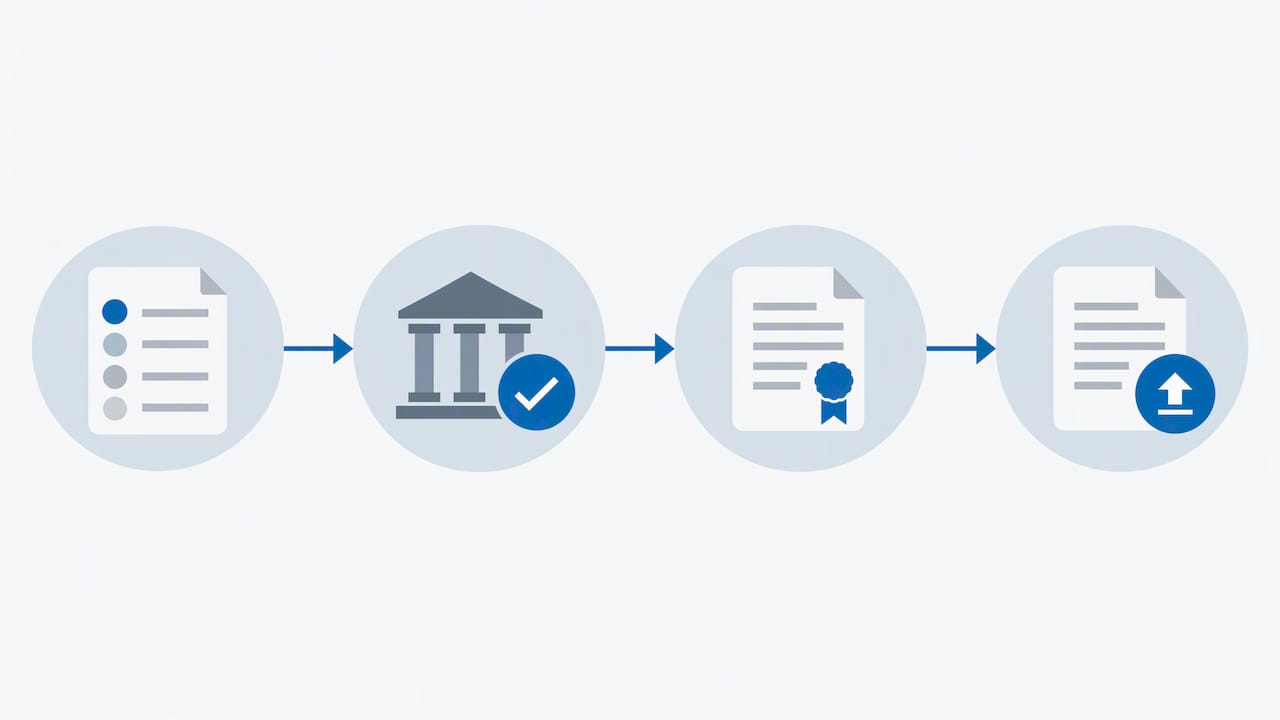
The sequence matters as much as the share terms themselves, because HMRC will not authorise certificates out of order.
- Allot the shares first. Complete the allotment on the agreed date, recording nominal value and the cash amount paid per share.
- Wait until the trading or spending threshold is met. Gov confirms a company cannot submit the compliance statement until it has traded for the required period or spent the required proportion of the money raised by that share issue.
- Submit the SEIS1 compliance statement. VCM35040 confirms a separate SEIS1 is required for each share issue, though all shares of the same class allotted on the same day count as a single issue for this purpose.
- Issue SEIS3 certificates once HMRC approves. Investors need the SEIS3 to claim their income tax relief, and the company cannot send certificates before authority is granted.
Alongside the HMRC steps, update your statutory register of members, issue share certificates to each subscriber, and file form SH01 with Companies House within the applicable filing period. The SH01 return must state the class, number and nominal value of shares allotted, the amount paid on each, and the rights attached, and it will flag plainly whether the shares were fully paid.
Pro Tip: Diarise the trading or spending trigger as soon as funds land, so the SEIS1 goes in as soon as you’re eligible rather than sitting in a drawer while investors wait on relief.
Our guide to completing SEIS1 covers the form itself in more detail if you’re preparing the submission for the first time.
How founders typically structure shares for a SEIS round
Most SEIS rounds use a single class of ordinary shares, and that simplicity is deliberate rather than a compromise. A clean class avoids the drafting risk of embedding a preferential right by accident, and it keeps the cap table easy for later investors to read.
- Keep dividend rights plain. Avoid preferential dividend rights, especially rights that are cumulative or variable, so the share terms remain consistent with HMRC’s requirements.
- Separate founder vesting from the share class. Vesting is usually handled through a shareholders’ agreement or reverse vesting mechanism rather than a share right, so the SEIS shares themselves stay unconditional.
- Avoid nominee structures for SEIS subscribers where possible. HMRC wants the named investor to hold full-risk ordinary shares directly; routing the investment through an intermediary adds a layer that needs its own legal review.
- Reserve option pool shares separately. Unissued option pool shares don’t affect the SEIS allotment itself, but the company’s gross assets and employee count limits under the SEIS eligibility rules still apply at the time of issue.
On the administrative side, set the nominal value consistently with your existing share classes, confirm the full subscription amount has cleared in cash before the allotment date, issue certificates promptly, and file the SH01 return within the applicable filing period.
Pro Tip: Run a checklist with your solicitor or accountant before allotment: confirm the share class has no redemption or preferential winding-up rights, confirm cash has cleared in full, confirm the articles don’t conflict with SEIS terms, and confirm the SH01 is ready to file.
A related question worth settling early is sequencing: if you plan a later EIS round, the share class for that round is typically kept distinct from the SEIS allotment to avoid muddying which shares qualify for which relief.
Founder perspective: common practical pitfalls and how an adviser helps
The same handful of mistakes show up repeatedly in SEIS rounds. Founders issue partly paid shares to simplify cashflow, then discover the shares no longer qualify. Some draft a redemption right into the articles to reassure an investor, not realising it disqualifies the entire issue. Others run SEIS and EIS tranches without separating the share classes and compliance statements, or they allot shares correctly but miss the applicable SH01 filing deadline at Companies House.
A specialist adviser typically handles this by:
- Drafting the share terms so dividend rights, redemption and winding-up provisions meet the statutory test before allotment.
- Timing the SEIS1 submission against the trading or spending threshold so certificates aren’t delayed unnecessarily.
- Preparing investor packs and SEIS3s once HMRC confirms approval, so investors can claim relief without chasing paperwork.
- Checking the share register and SH01 against what was actually allotted, catching mismatches before HMRC does.
We work through exactly this process as part of our SEIS and EIS advisory work at Price & Accountants, which sits alongside the broader funding support we provide to early-stage founders.
Why paperwork sequencing matters more than clever share terms
The biggest misconception about SEIS share structure is that it rewards cleverness. It doesn’t. The schemes that run smoothly are the ones where founders resisted the temptation to add a dividend sweetener or a soft redemption right to close a nervous investor, and instead kept the share class as plain as HMRC’s test demands.
Where conventional advice falls short is in treating the share terms and the compliance timeline as separate problems. They aren’t. A perfectly qualifying share class submitted on the wrong SEIS1 timeline, or allotted without a timely SH01 filing, creates the same investor frustration as a disqualifying share right. Founders should prioritise the sequence: confirm the share terms meet the statutory test before drafting anything else, then build the paperwork calendar around the trading or spending threshold rather than around investor pressure to move faster.
The founders who get this right treat SEIS compliance as an operational task with a checklist, not a one-off legal exercise to tick off and forget.
— Rahamut
Setting up your SEIS share issue correctly from the start
Getting a SEIS allotment right the first time saves the back-and-forth of correcting share terms after investors have already committed. We work with founders at the point of structuring the round, checking that the proposed share class, articles of association and subscription terms meet HMRC’s conditions before anything is allotted, then handling the SEIS1 submission, investor packs and SEIS3 issuance once approval comes through.

If you’re preparing a SEIS round, a short technical review of your draft allotment and articles before you issue shares can catch problems while they’re still easy to fix. Our SEIS and EIS advisory service covers exactly this, from share-structure drafting through to compliance filing, and you can see how we work alongside our pricing plans for ongoing support.
FAQ
What are the different classes of shares in the UK?
UK companies commonly issue ordinary shares, preference shares, redeemable shares and deferred shares, each carrying different rights to dividends, capital and votes. For SEIS purposes, only full-risk ordinary shares with no preferential or redemption rights qualify, as set out in HMRC’s VCM33020 guidance.
Can I give my children shares in my company?
Yes, you can allot or transfer shares to your children, though doing so has tax and company law implications that depend on their age and your shareholding structure. This falls outside SEIS rules specifically, so it’s worth treating as a separate conversation with your adviser from your SEIS allotment planning.
How much is stamp duty on shares in the UK?
Stamp duty generally applies to share transfers rather than new allotments, so a SEIS share issue itself does not usually trigger a stamp duty charge. New shares issued directly by a company to an investor are an allotment, not a transfer, which is why SEIS rounds are typically structured as fresh issues.
How are vested shares taxed in the UK?
Vesting itself is usually a company law and contractual mechanism rather than a taxable event, but tax can arise depending on how the vesting is structured and whether shares are subject to restrictions. SEIS shares need to be unconditional at issue, so most founders keep vesting arrangements in a separate shareholders’ agreement rather than attached to the share rights themselves.