
Keep contemporaneous project evidence, such as project narratives, test logs, timesheets and invoices, and map every cost to a specific project. Submit the Additional Information Form before or on the same day as your Company Tax Return, as HMRC requires. Create records as the work happens, and check the applicable retention requirements for how long to keep them.
TL;DR:
- Create dated project records as work happens, documenting uncertainties, experiments, failed approaches, decisions, and outcomes; HMRC does not require a prescribed format.
- Tag every claimed expense to a named project, and document a logical apportionment method when accounting systems cannot separate shared costs.
- Cloud and data license costs may qualify for periods beginning on or after April 1, 2023, only when used for R&D, not qualifying indirect activities.
- File the Additional Information Form for each claim period before or on the Company Tax Return date, and submit it first when filing both together.
- Keep records for at least six years after the accounting period ends as a baseline, and longer if a dispute remains open.
Table of Contents
- What project evidence does HMRC expect you to record?
- Which financial records link costs to your R&D projects?
- How do you create contemporaneous records without slowing the team down?
- What does the Additional Information Form ask for, and when is it due?
- How long should you keep R&D records, and how should you store them?
- How does HMRC examine a claim, and what raises enquiry risk?
- How we organise evidence for our clients
- How can we help you keep R&D records HMRC will accept?
- FAQ
- Sources
What project evidence does HMRC expect you to record?
HMRC prescribes no format, but your records must identify qualifying projects, link costs to them and leave a clear audit trail, as the examining a claim manual explains. For the technical side, that means evidence showing what was uncertain, what you tried and what happened.
Build your project file around these items:
- Project description: the scientific or technological uncertainty, your planned approach and why the answer was not readily deducible by a competent professional.
- Experiment and test logs: dated entries, design files and prototype photographs that show each iteration, including the ones that failed.
- Meeting minutes and decision records: notes from technical reviews and emails that capture why you chose one route over another.
- Competent professional opinion: where you use one, keep the author’s qualifications, their reasoning and the link to the project.
HMRC’s recommended approach to claims and record keeping is built around planning ahead. Evidence written at the time is preferred to a narrative reconstructed from memory, and relying on recollection alone is increasingly insufficient.
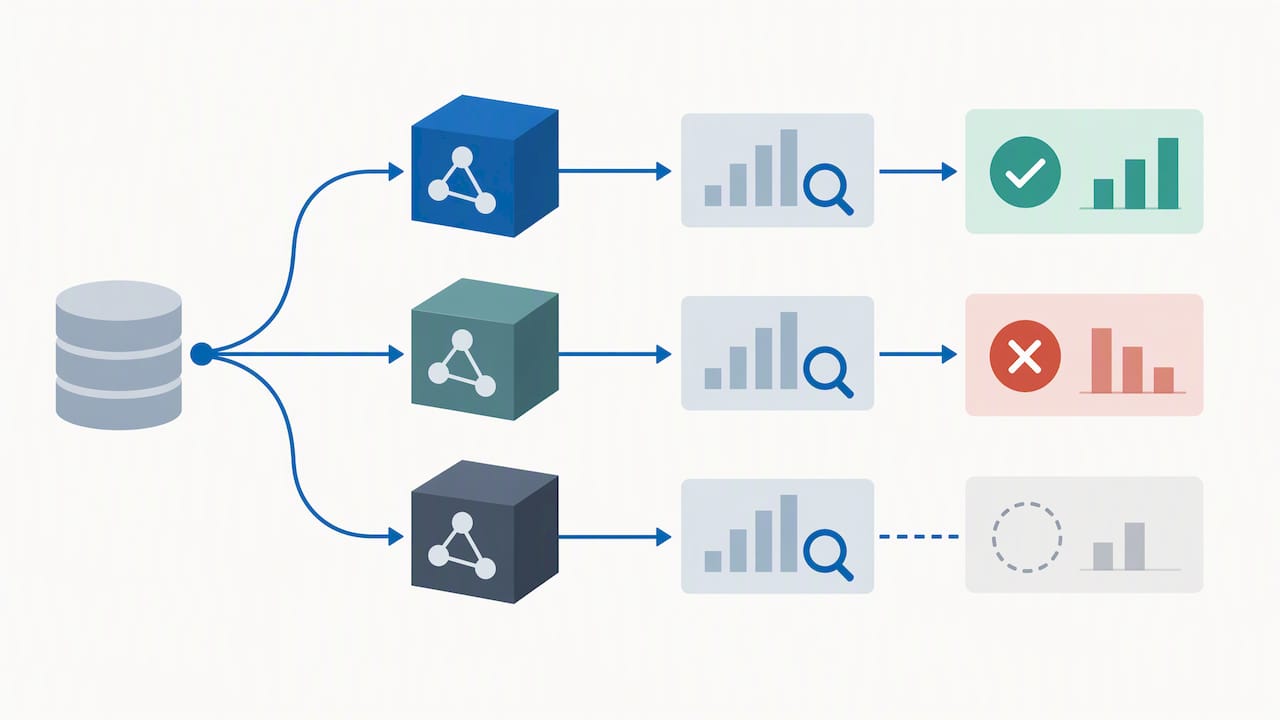
A practical example: a fintech team building a fraud-scoring engine should log each model variant, the hypothesis behind it and the measured result. A failed variant is not wasted effort. It is proof that the outcome was uncertain.
Pro Tip: Add a note to every ticket or pull request that says what was uncertain and what the result taught you. This can help build the narrative evidence you will need.
Which financial records link costs to your R&D projects?
HMRC expects you to map every claimed cost back to a specific project. Where your accounting system does not track costs by project, you must document a logical apportionment method, as the additional information form manual sets out.
Keep these financial records together:
- Payroll records: gross pay, employer National Insurance and pension contributions for the people who worked on the projects.
- Timesheets or activity logs: showing hours spent on qualifying work, ideally by project and by week.
- Invoices, purchase orders and supplier contracts: for consumables, software and any subcontracted R&D.
- Methodology note: a written explanation of any sampling, percentages or rules you used to split shared costs.
Digital costs deserve particular care. For periods beginning on or after 1 April 2023, data licence and cloud computing costs can be claimable, but only where they are used for R&D rather than for qualifying indirect activities. Record the R&D share separately, for example by tagging a dedicated cloud account or environment to the project.
Statistic callout: HMRC’s guidance says that, from 1 April 2023, certain digital expenses such as data licence fees and cloud computing costs can be claimed when used for R&D. Evidence the R&D use, because the cost alone does not qualify.
Our own guide to eligible R&D costs for UK SMEs walks through cost categories with worked examples, and GOV.UK’s page on what costs you can claim lists the allowable categories.
How do you create contemporaneous records without slowing the team down?
Strong evidence does not need heavy process. It needs short entries made at the moment the work happens, inside tools your team already uses. We suggest this routine:
- Add a short “uncertainty and outcome” field to your tickets in Jira, Linear or GitHub, so each experiment records its own result.
- Create one project code per R&D project in Xero or your accounting software, and tag every related invoice, expense and payroll journal to it.
- Capture time automatically with a tool such as Toggl or Harvest, using the same project codes, and review it monthly.
- Store a one-page project summary alongside the code repository and update it at each milestone.
- Reconcile the project codes in your accounts against your timesheets each month, so gaps are caught while memories are fresh.
Three minimal templates cover most needs:
- Experiment log: date, hypothesis, method, result, next step.
- Technical decision note: the problem, options considered, option chosen, reason, who decided.
- Project summary: objective, the uncertainty, approach, outcome, people involved, cost code.
Keep templates brief. If a template feels burdensome, shrink it until people actually fill it in.
Pro Tip: Block a regular slot to review timesheets and project codes together. Reviewing them as you go can avoid a lengthy reconstruction at year end.
What does the Additional Information Form ask for, and when is it due?
You must submit the form at least once for each accounting period in which you claim, and before or on the same day as the Company Tax Return. If you file both together, submit the form first. GOV.UK guidance on the form and the HMRC manual on the claims process both say so.
The form asks for:
- The number of R&D projects in the period.
- A description of each project, including its main field of science or technology.
- The technological uncertainties and the methods used to address them.
- A breakdown of qualifying expenditure by category, such as staffing, cloud computing and data licences.
Vague or nonspecific answers are a problem. HMRC uses the form in its risk assessment, and the time limits manual notes that incomplete or improper responses raise the risk of compliance intervention. Specific answers that match your underlying records signal a well-run claim.
Before you start the form, gather:
- Your project summaries and uncertainty statements.
- Payroll and timesheet totals by project.
- Supplier invoices for consumables, cloud and subcontractors.
- Your written apportionment methodology.
Our walkthrough on getting the R&D claim process right first time covers the order of work from form to return, and our note on claim deadlines explains the statutory limits.
How long should you keep R&D records, and how should you store them?
Check the applicable retention requirements and keep records for as long as needed, including while a dispute or enquiry is open.
Storage practice matters as much as duration:
- Access controls: limit editing rights so records cannot be quietly altered after the event.
- Audit trail: prefer systems that log changes, so you can show when an entry was created.
- Single location: hold project evidence in one structured place rather than scattered across personal inboxes.
- Data-protection record: note what personal data your logs contain, why you keep it and when it will be deleted.
Timesheets, payroll data and emails may contain personal data. Consider your data-protection responsibilities, and write down your retention policy and the reasoning behind it. Being able to show that you made a deliberate, documented decision can help demonstrate compliance.
How does HMRC examine a claim, and what raises enquiry risk?
HMRC looks for identified qualifying projects, costs mapped to those projects and a complete form. HMRC officers are told to be flexible and pragmatic, so a clear, logical explanation of your documented apportionment method can help support the claim. The records manual and a further entry on quantifying claims both stress that examiners value clear, logical explanations backed by contemporaneous evidence.
The weaknesses we see most often:
- Retrospective-only narratives: a polished story with no dated evidence behind it.
- Undocumented apportionment: a percentage applied to shared costs with no written reason.
- Missing supplier invoices: costs claimed without the document that proves them.
- Generic form answers: project descriptions that could describe any software company.
To reduce risk, keep your project summaries current, retain the form’s reference, and record the method you used to split shared costs. If an enquiry does arrive, our guide on responding to an HMRC R&D enquiry sets out the first steps.
Pro Tip: Read your own claim as an examiner would. For every figure, ask whether you could point to a document that supports it within a few minutes.
How we organise evidence for our clients
When we onboard a client, we ask to see the project list, a sample of recent technical notes, the payroll summary and how time is currently tracked. At each month end we ask for updated timesheets and any new decision notes, so the claim builds as the year goes on rather than being assembled at the end.
We recommend a simple folder structure: one folder per project, with subfolders for technical evidence, finance and correspondence, and file names that start with the date. That alone speeds up collation considerably.
We suggest a written competent professional opinion when the uncertainty is hard to explain to a non-specialist, or when the technical field is narrow. An independent reading on file strengthens the narrative.
— Rahamut
How can we help you keep R&D records HMRC will accept?
If you would rather not build this system alone, we can set it up with you. Our team handles R&D tax credit claims for UK tech and fintech startups, tagging spend to projects in your Xero file and preparing the Additional Information Form from your records. Our plans are listed on our pricing page: Core Services at £249 per month, Blue Plan at £549 per month and Black Plan from £1,999 per month. You can also browse our full range of services, then get in touch to talk through your next claim.
FAQ
When must the Additional Information Form be submitted?
You must submit it at least once for each accounting period you claim for. It has to be filed before or on the same day as your Company Tax Return, and if you file both together, submit the form first, as set out in HMRC’s guidance.
What is the minimum set of R&D records I should keep?
Keep a project description with the uncertainty, dated test or experiment logs, payroll and timesheet data, and invoices for related costs. HMRC does not prescribe a format, but the records must identify projects and link costs to them, according to its records manual.
What format should timesheets take?
HMRC sets no required format. A timesheet or activity log that shows hours by person, by project and by period, created close to the time the work happened, serves the purpose. Keep the apportionment method in writing as well.
How long should I keep R&D records?
Keep them for at least six years from the end of the accounting period as a sensible baseline, longer if a dispute is open. Store them securely and record your retention decisions.
Can cloud and data licence costs be claimed?
Sometimes. Where they are used for R&D, they can qualify for periods beginning on or after 1 April 2023, but not when used for qualifying indirect activities, according to HMRC’s guidance update. Record the R&D share separately.